
Climate Change and Water Management
Our Strategies for Sustainable Agriculture
Water conservation has always been one of our absolute priorities in all our operations, both in the vineyard and in the cellar, especially in a context of increasing climate instability.
In recent years, we have experienced long periods of drought interspersed with intense rainfall and subsequent flooding. Careful management of water resources and drainage on our land is becoming crucial to effectively and proactively counteract the challenges we face without negatively impacting the environment we strive to preserve.
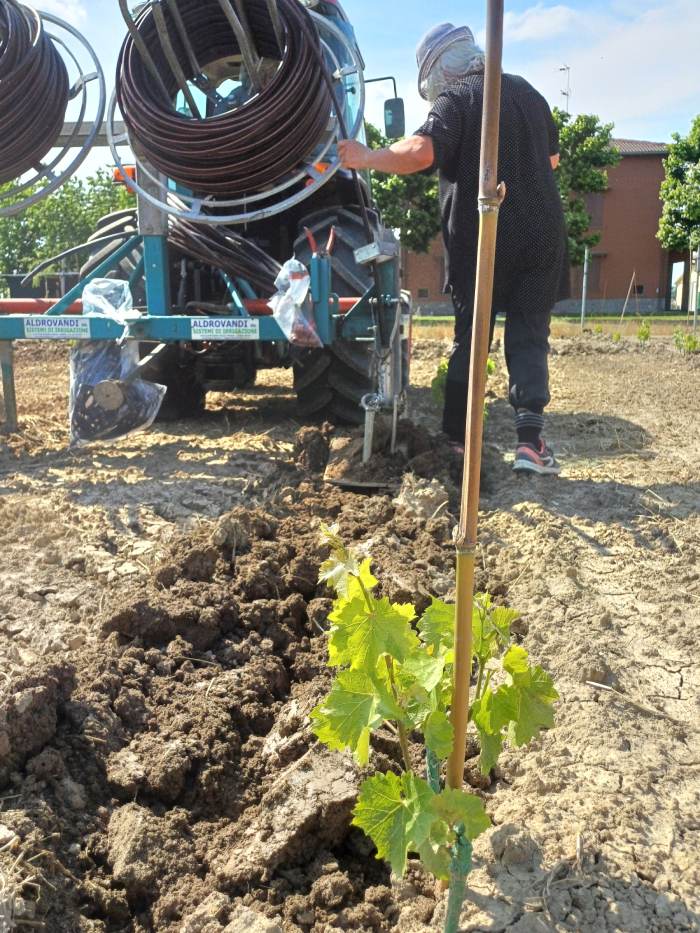
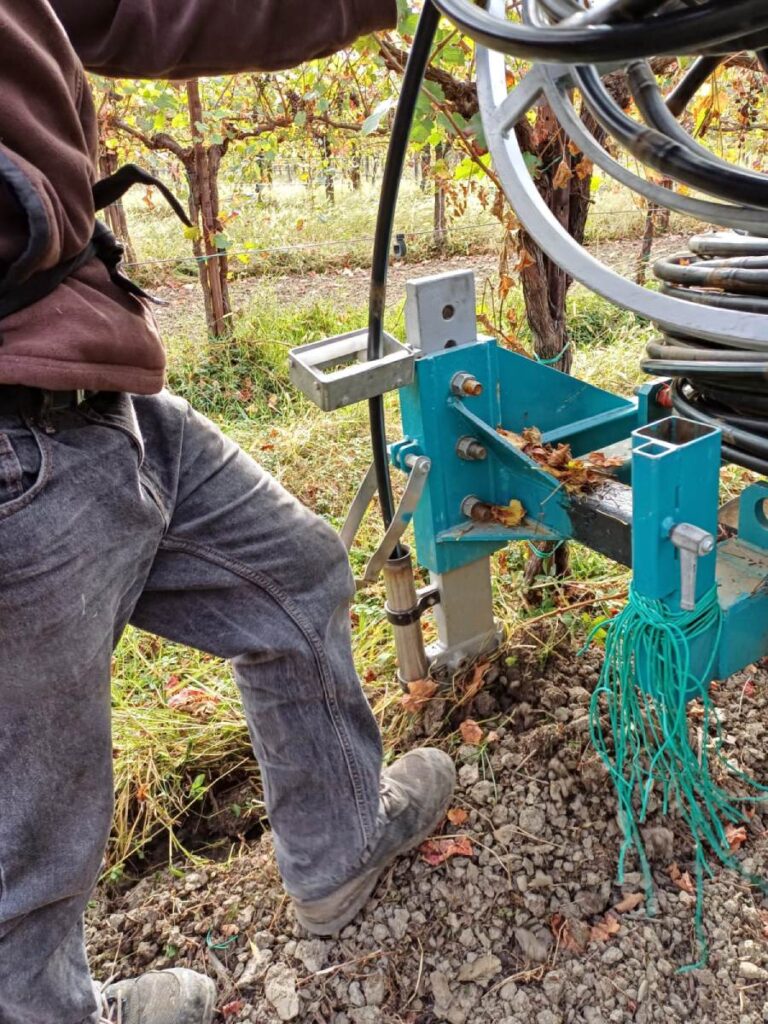
Subsurface Drip Irrigation: Our vineyards are equipped with an underground drip irrigation system that delivers groundwater directly to the plant root zone, thereby preventing evaporation. This efficient system supports our plants during periods of severe drought while simultaneously reducing water waste compared to surface irrigation.
Agrometeorological Sensors: We have installed agrometeorological sensors at strategic points in the vineyard that provide us with information on meteoclimatic and environmental conditions. The collected data allows us to make targeted decisions for the management of water resources and crops.
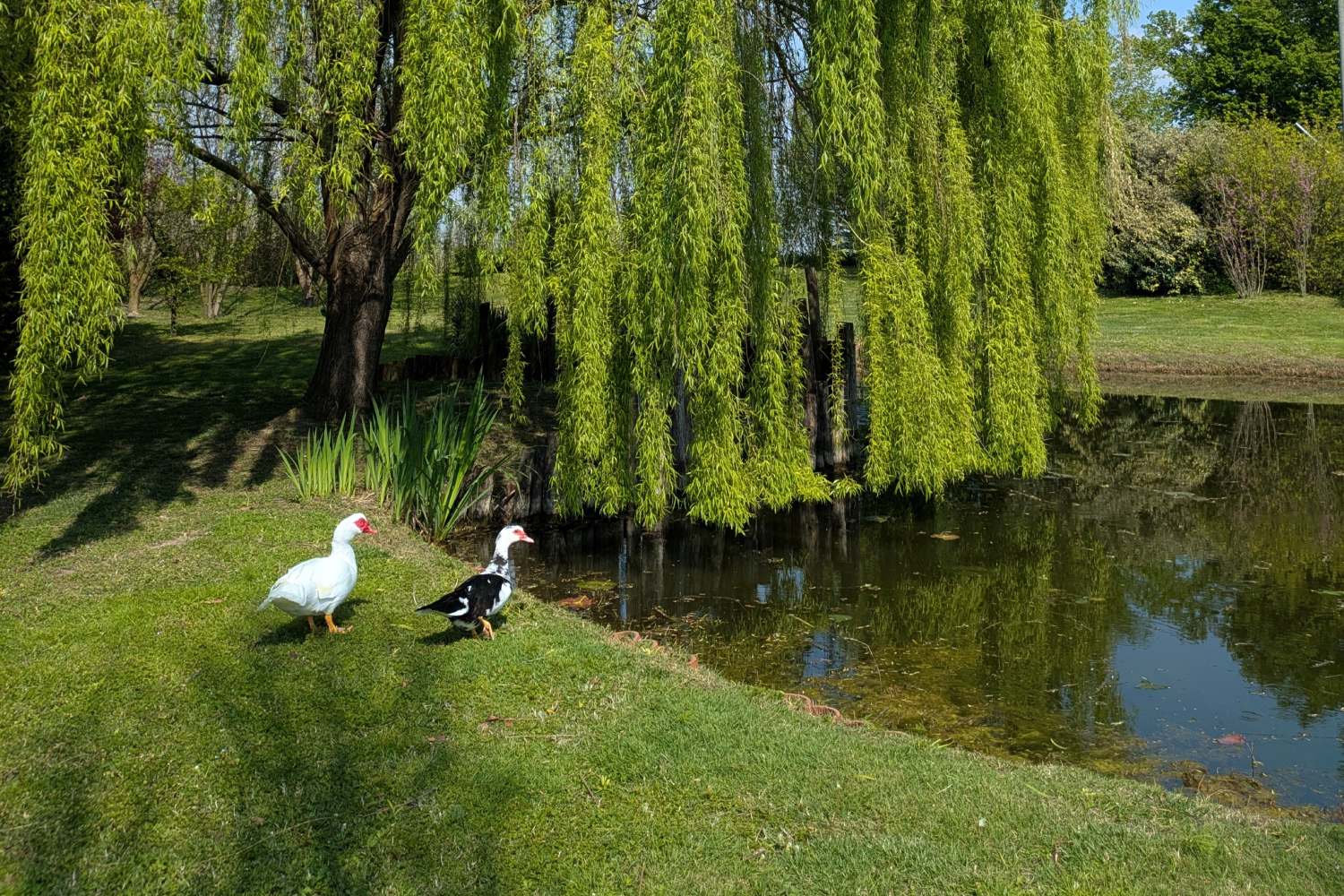
Rainwater Harvesting: We collect rainwater and runoff from our courtyard into underground tanks, which we then use for fertigation of the park surrounding our company, thus reducing the consumption of drinking water. This water also flows into our biolake, a body of water surrounded by native plants, which has become a refuge for various species of animals and insects.
Phyto-Purification System: Wastewater from our operational premises is treated using a Phyto-Purification system that replicates the natural self-purification principle typical of aquatic environments and wetlands. We have planted several species—including hazel, purple loosestrife, yellow iris, and elderberry—which filter the water by absorbing nitrogen and organic compounds from the wastewater.
By implementing these strategies, alongside other organic agronomic practices such as green manure (cover cropping), we foster biodiversity and the health of our plants and soil, mitigating the effects of climate change.
This approach is based on conscious, measured management that is never invasive, relying on careful daily observation and profound respect for natural rhythms, all forms of life, and environmental resources.