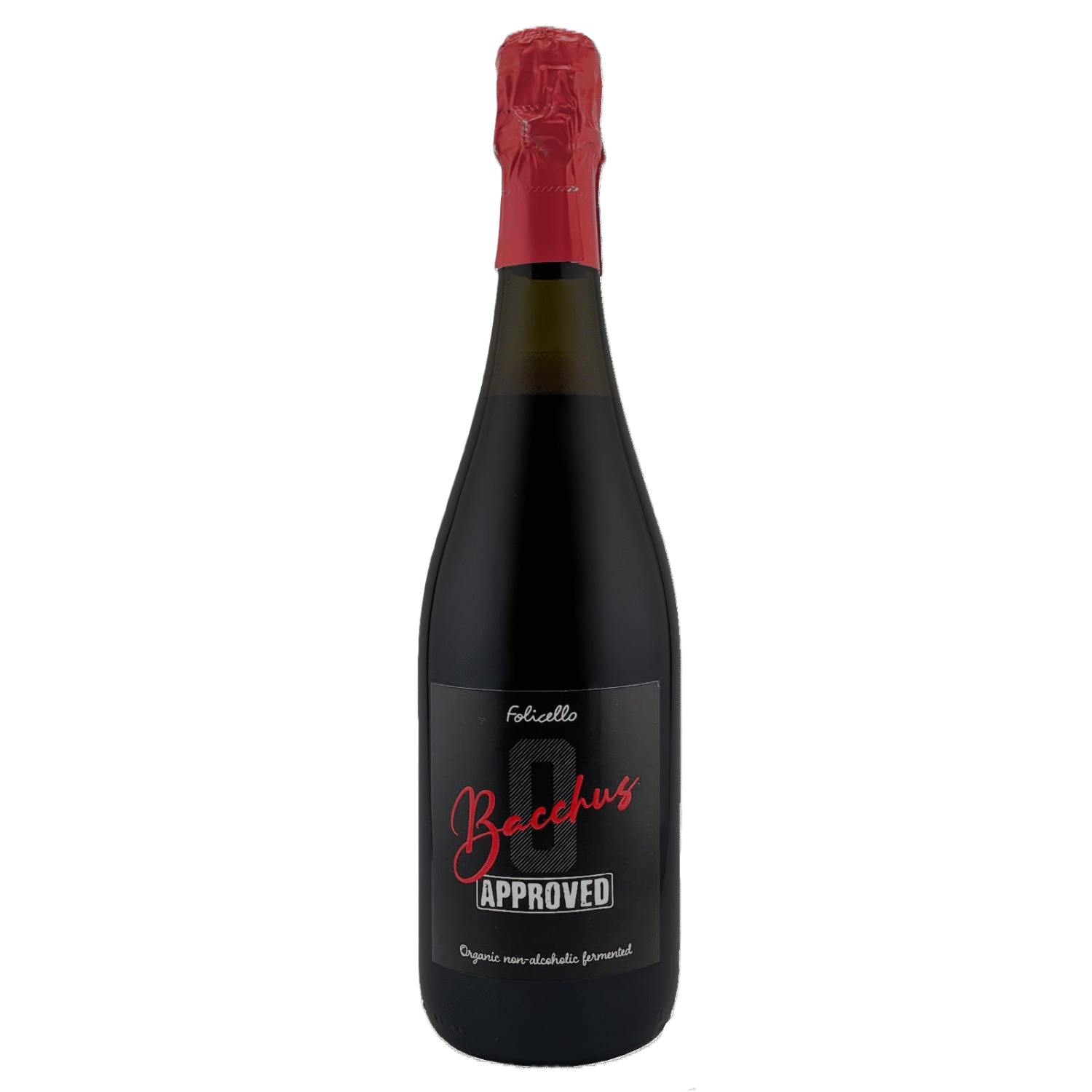
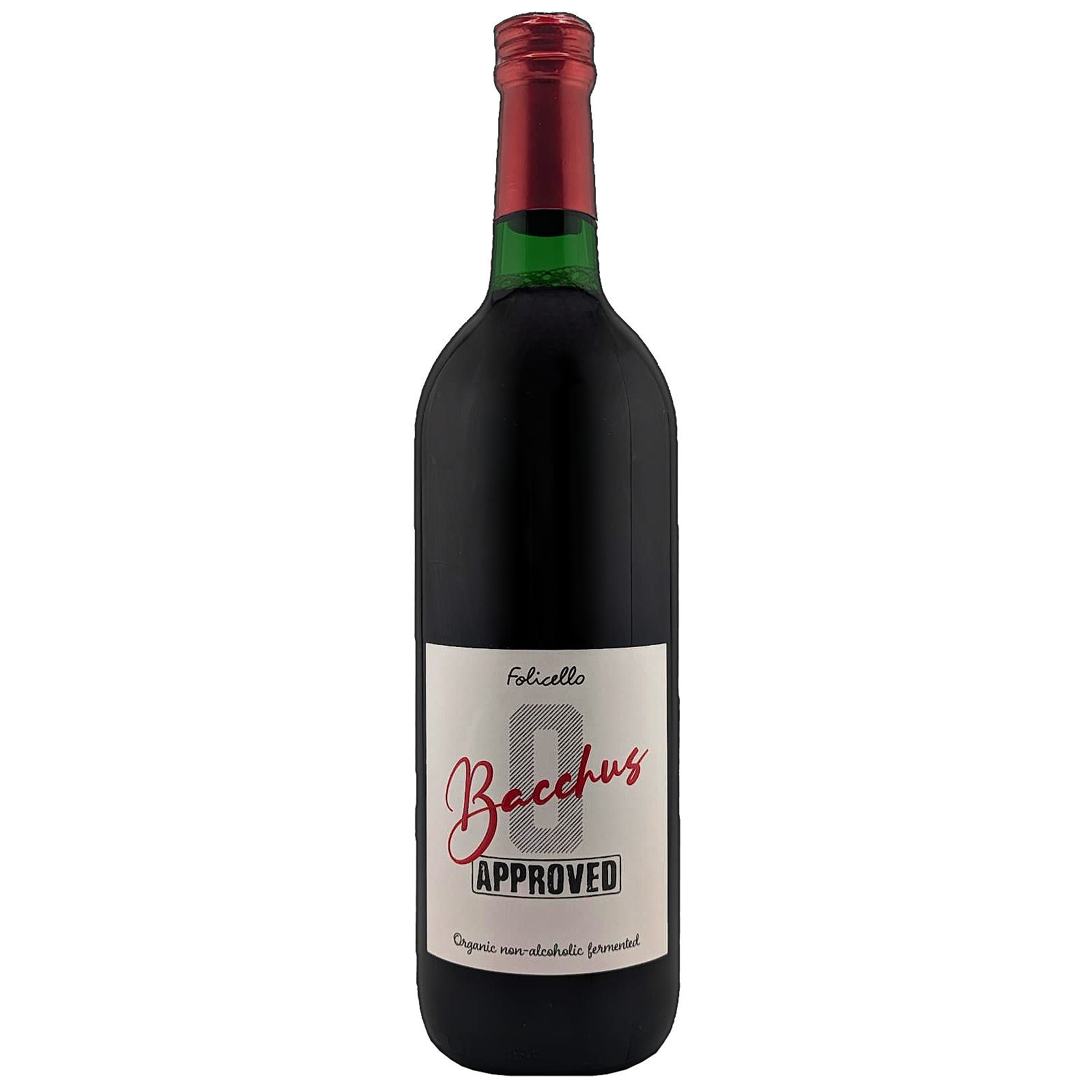
Bacchus 0 – red still drink
Organic non-alcoholic fermented
An alcohol-free wine alternative made with fermented red grape juice
Bacchus 0 is a pure, genuine, and inclusive product, naturally alcohol-free. It boasts a unique complexity born from a specialized fermentation process using lactic acid bacteria and non-saccharomyces yeasts naturally found on grape skins. Bottled and pasteurized to ensure longevity without preservatives, Bacchus 0 is a refreshing, balanced beverage where sweetness, acidity, and savoriness harmonize perfectly, making it a sophisticated choice that pairs effortlessly across an entire menu.
Crafted from freshly ripened red grapes, this still reference stands out for its fuller body and remarkable fruit intensity. Its deep ruby red shades reveal a rich bouquet of ripe wild berries and pomegranate, enhanced by subtle fermentative notes. Characterized by a more robust structure and a lingering depth of flavor, it offers a smooth yet vibrant palate that beautifully complements savory dishes.
It is the ideal companion for light cold cuts — including plant-based alternatives — and pairs exquisitely with hearty legume-based dishes.
Packaging: 750 ml bottle
Vintage: 2025
Expiry date: 30/10/2028
Ingredients
Stabilizers: acacia gum (*).
(*) from organic farming
No added sugars. Contains naturally occurring sugars.
Nutrition declaration
per 100 ml of product
Calories: 192 kJ / 45 kcal
Fat: 0 g of which saturates: 0 g
Carbohydrates: 10 g of which sugars: 10 g
Protein: 0 g
Salt: 0.01 g
Winemaking
The product is then bottled and pasteurized to ensure longevity without the use of preservatives. Every stage of production is carefully defined to preserve the freshness and nutritional integrity of our musts as much as possible.
No sulfites or animal-derived products are used in the process. We therefore self-certify the product as Vegan.
Food pairings
Shelf life and serving temperature:
The product has a shelf life of 3 years from bottling date. Once opened, keep refrigerated and consume within 3–4 days to preserve its organoleptic characteristics.
Best served at 10–12°C.