
Green Manure: Benefits for Soil and the Environment.
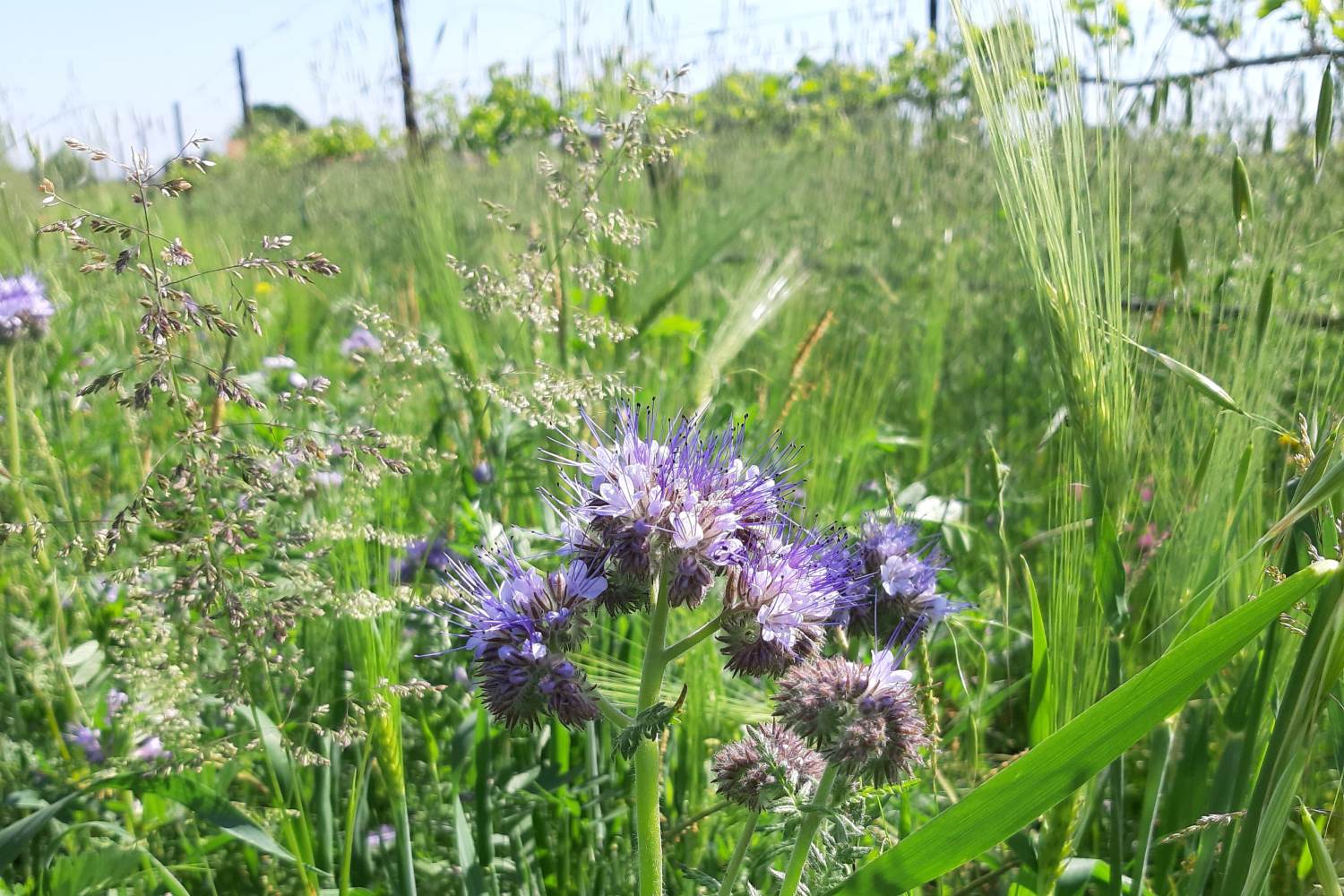
At Folicello, we sow herbaceous plants between the rows of our vineyards in autumn and spring, enriching our fields with flowers and biodiversity. This agricultural practice is an ancient technique that is increasingly relevant today, known as green manure (or cover cropping).
It consists of planting different species, such as legumes and grasses, allowing them to reach maximum vigor, and then folding them down into the soil after flowering. This process prevents seed formation and extends the beneficial effects of this green cover on the land.
The benefits of this sustainable farming technique are numerous:
– Soil Structure: It helps maintain the soil’s fertility and structure, as the plants’ roots consolidate and aerate the soil;
– Natural Fertilizer: Thanks to the nitrogen-fixing action of legumes, it provides nitrogenous substances and nutrients to our vines, acting as a natural organic fertilizer;
– Microclimate Creation: It creates a microclimate that promotes a healthy growth environment for our vines, protecting them from excessive sun and extreme temperatures. It maintains soil moisture, preventing cracks and reducing water evaporation;
– Biodiversity Boost: It fosters an increase in biodiversity in our vineyards due to a greater variety of grasses, flowers, and thus, insects. This creates a small, balanced ecosystem that encourages a natural regulation between beneficial and harmful insects.
While predominantly clay soil like ours has many positive aspects—such as its fertility and richness of components, which lend good minerality and flavor (sapidity) to our grapes and wines—it is also difficult to work. It tends to crack easily or become compacted. Therefore, we believe that green manure and its advantages are, in their simplicity, essential for keeping our soil healthy and vital, resulting in strong plants and balanced fruit.